
For bars and restaurants in Mexico
Your bar closed at 2:10.
By 9:00 you know everything.
While you sleep, AventarIA balances your cash, depletes the inventory of every drink, compares what you buy against Costco, Walmart and Chedraui and finds where the money went. In the morning your summary is waiting, on WhatsApp once your number is connected. You just approve.
Start without changing your POS · No lock-in contracts · No per-user fees

Tips $1,021, kept out of your sales9:00
9 comps on Paula's tables over 4 Fridays, $1,305 at list price.9:00
Example with data from our demo bar
One night with AventarIA
A back-office manager's work, done before you wake up.
No spreadsheets at 3 a.m. This happens on its own, every night.
You close the register
The system already knows how much cash should be there. If some is missing, you know it, who closed and when.
Inventory depletes itself
Every Margarita subtracts its tequila, lime and ice by your recipe. No manual counts.
Costs and margins
Every item sold carries its real cost. You know what each drink earned, not just what you sold.
Finds leaks
Comps, voids, discounts and what left the bar unpaid. The signal is the pattern, not an accusation.
Compares prices
Checks your supplies at Costco, Walmart, Chedraui, City Club and Soriana, and prepares your order from what you actually used.
Your morning summary
Sales, what to review and how much is at stake. It reaches you on WhatsApp once your number is connected; you approve from your phone.
To review today
No more dashboards. Decisions, in pesos.
At the top, what needs your attention, sorted by the money at stake. Every card links to the evidence: the ticket, the close, the count.
- Every finding with its amount, who and when
- One tap for the evidence, another to mark it reviewed
- The AI proposes. No purchase, shift or refund happens without you
9 comps on Paula's tables over 4 Fridays
Tequila: 1.4 bottles over recipe
Saturday: $380 short in the drawer
Illustrative example with sample findings.
What it looks like inside
Every figure, with its evidence one tap away.
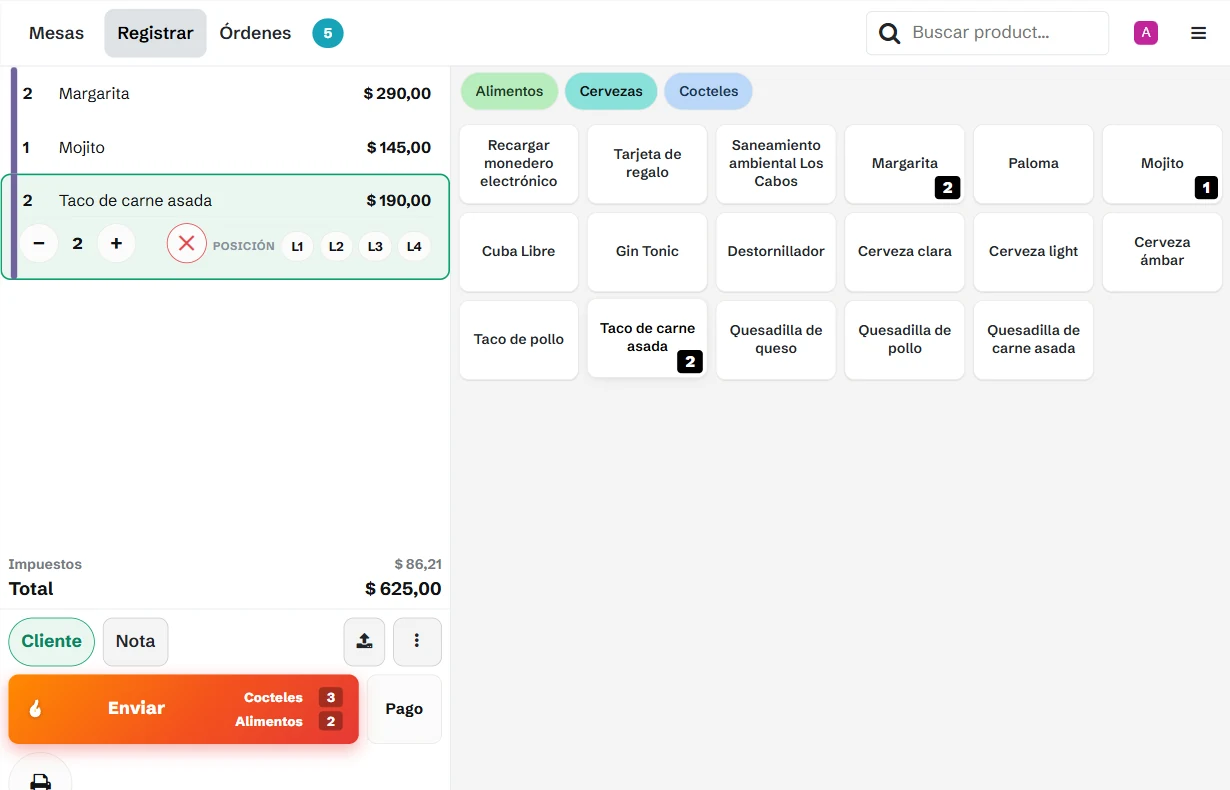
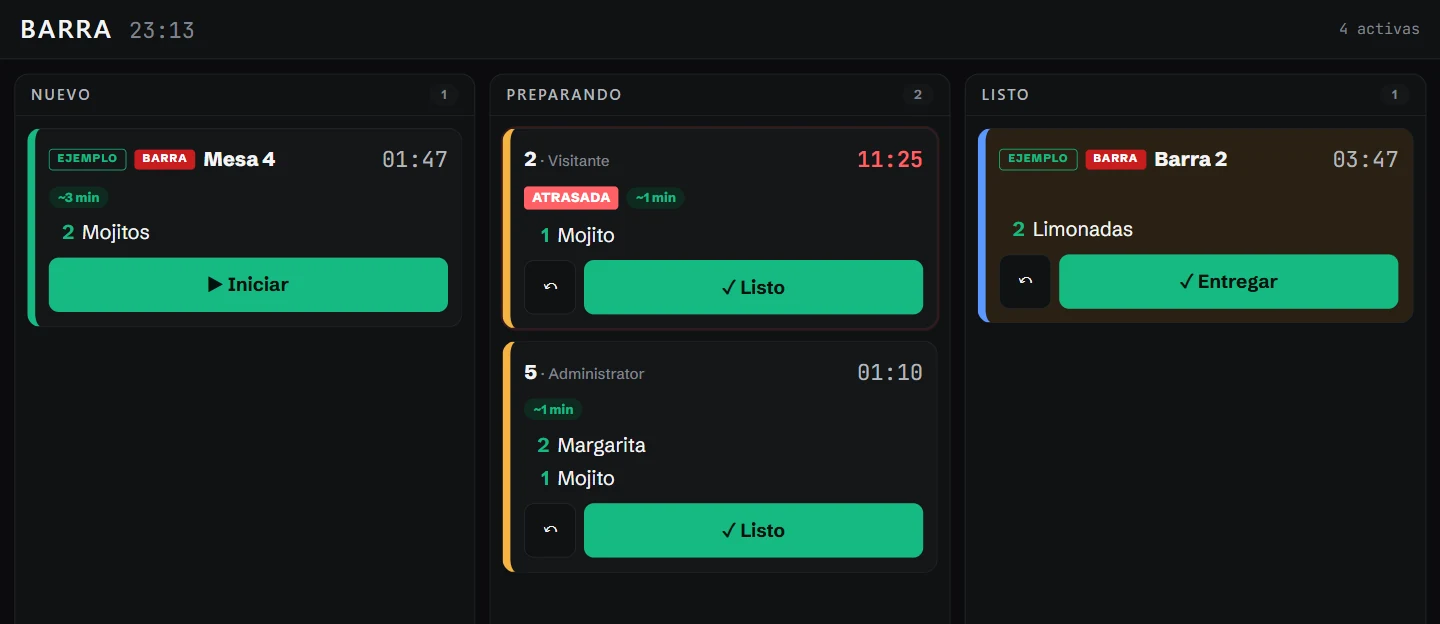
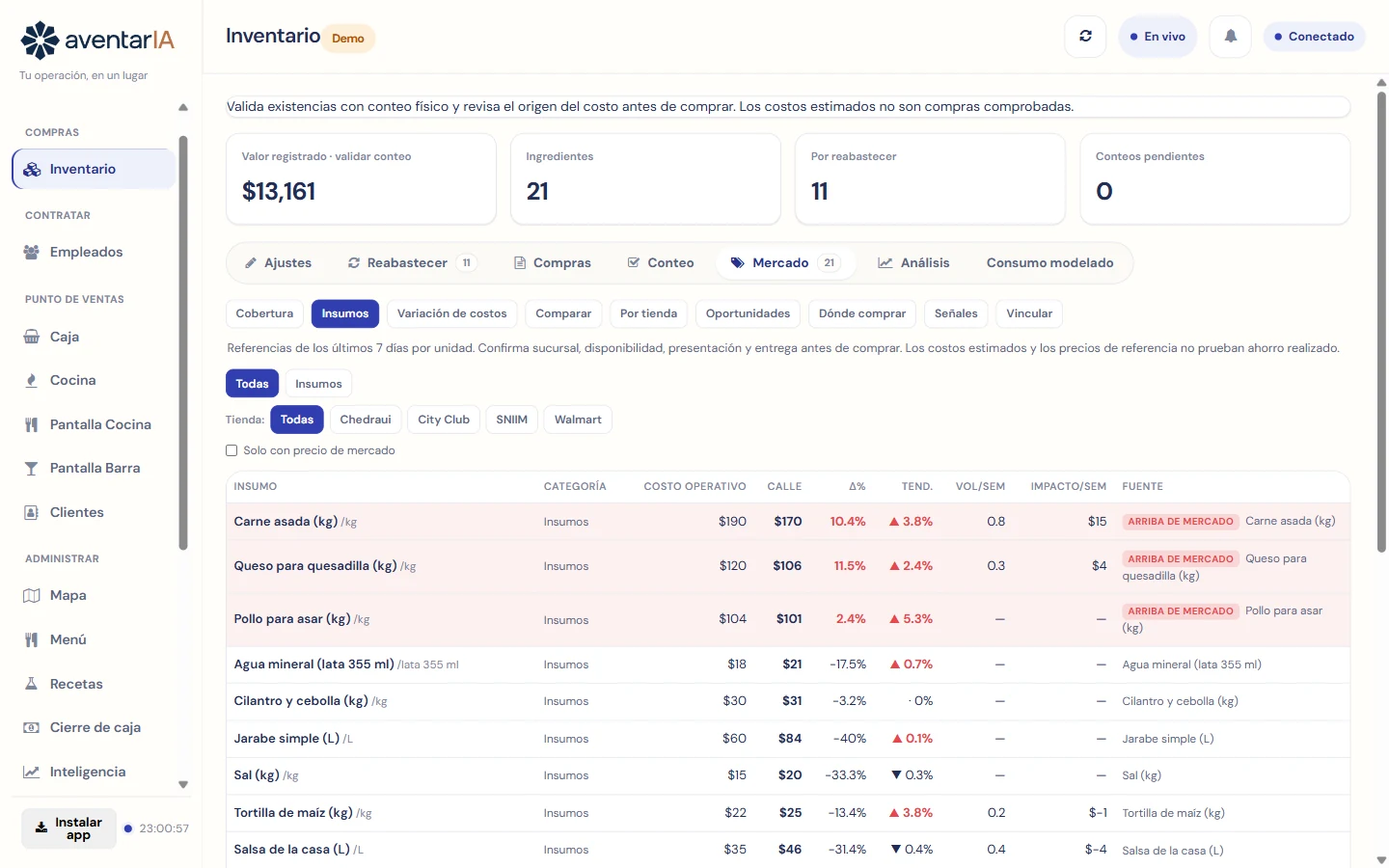
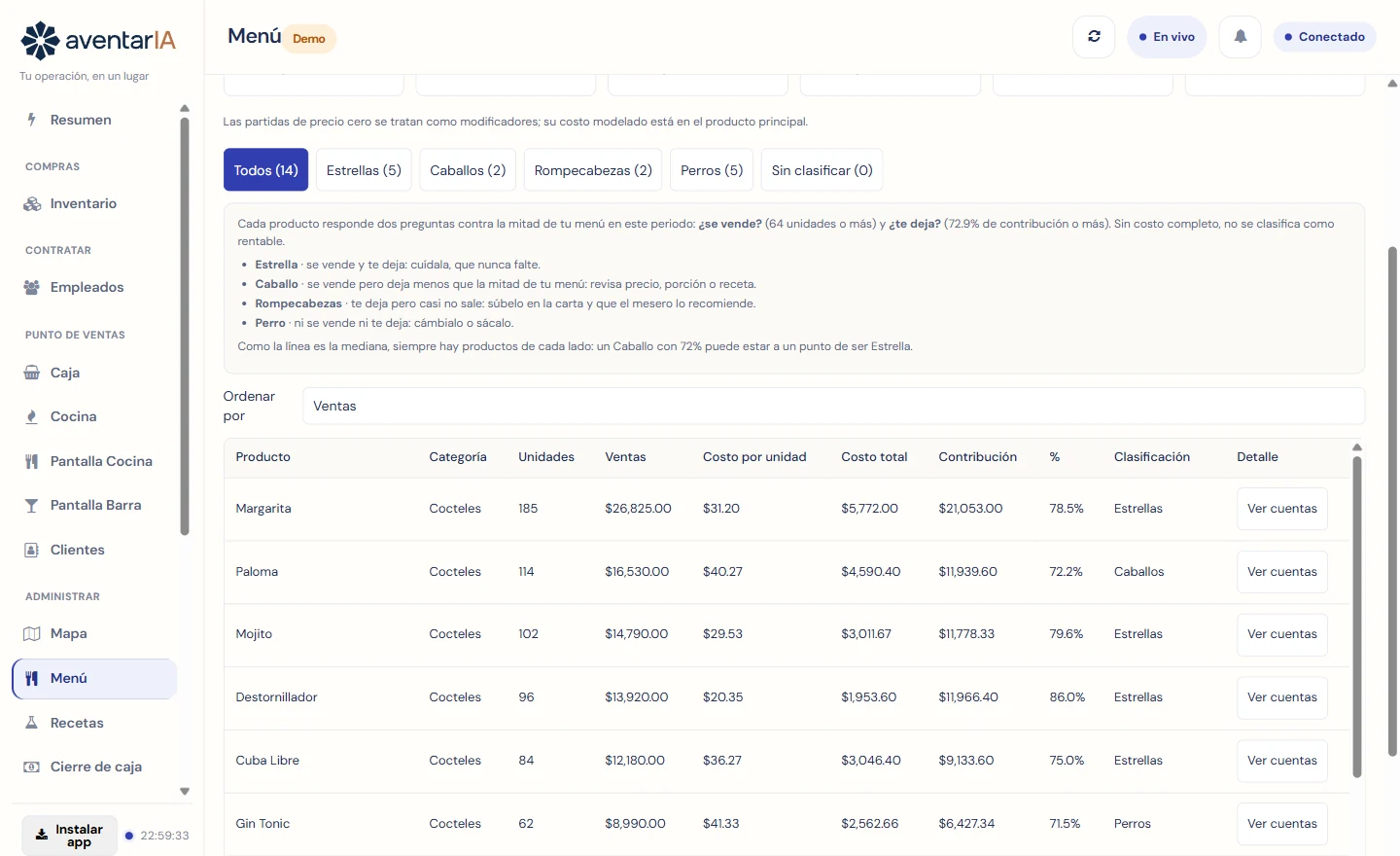
Real screens from Cabo Cócteles, our demo bar. Tap the image to walk through the app in six steps.
- Summary Sales, identified cost and contribution by day. Tap a day to see its checks.
- Take the order Tap each product. Quantities, each guest's seat and notes, without extra typing.
- Each station marks its progress Start, ready, deliver. Anything running late is flagged automatically.
- The best price Market compares your cost against today's price by store and flags what you are paying above the market.
- Menu Every drink and dish, classified with two questions: does it sell, and does it leave margin?
- Cash close How the cash that should be there adds up: float, payments, movements and count.
Buy smarter
Same bottle. Very different prices.
Don Julio Reposado, 700 ml. Across the stores we checked, the gap was $346.37: 39.6% below the highest price. AventarIA checks your supplies every day and tells you where to buy.
Demand forecasting
Your menu available.
Your inventory in balance.
AventarIA forecasts what guests will order to help prevent lost sales from unavailable menu items, reduce spoilage and free up cash tied to products that don't move. It also guides staffing around expected demand. With every new sale, the model adds data and refines the forecast.
Explore AventarIA forecasting →Five areas, one app
Start with what you need to solve.
Cash and tax
Cash closes, fiscal review and bank connection status. See Finance
Prices and orders
Daily prices, suggested orders and cost per recipe, always current. See Purchasing
Point of sale
Tables, tickets to bar and kitchen. Every drink depletes its ingredients. See Point of sale
Your team
Hiring, onboarding and shifts that respect rest days. See Hiring
AI voice and WhatsApp
We answer calls and messages so you never lose an order or a reservation. See Serve
You feel the difference at 9:00
Your morning, before and after.
Without AventarIA
- You get to the bar and count the cash again.
- You dig through Costco receipts in a bag.
- You guess how many limes to order for Friday.
- You find the leak at month end, if at all.
With AventarIA
- The cash is already balanced and you know if anything was missing.
- Your cost per drink is already current.
- The suggested order is waiting; you approve it.
- Leaks reach you with amount and evidence.
Pricing · MXN + VAT per location per month
Priced like a POS. Works like a back-office manager.
Diagnostic
- Send us a month of receipts and your sales report
- We tell you, in pesos, how much you overpay
- Real cost per drink for your best sellers
Purchasing
- Daily prices at 5 stores + SNIIM
- Suggested order from what you used
- Cost per recipe, always current
- Alert when a supplier raises a price
- SAT invoices reconciled
Operations
- Everything in Purchasing
- POS, kitchen tickets and floor map
- Inventory by recipe and cash close
- Leak detector and real prime cost
- A daily summary of what needs your attention; on WhatsApp once your number is connected
AventarIA guarantee · 90 days
We find you money, or you don't pay.
If within 90 days AventarIA doesn't find at least three times what you paid, we refund you. The app itself measures it: concrete findings you reviewed.
Nothing to install
Free 7-day diagnostic.
Send us a month of receipts and your POS report on WhatsApp. In 7 days we tell you, in pesos, how much you overpay against the market, where the cash goes and what each drink really costs you. If we find nothing, you pay nothing.
Do I have to change my POS?
Not to start. We begin with your purchases and your sales report. If you want everything, we install ours with training.
Does the AI decide for me?
No. It proposes with evidence and you approve. No purchase, shift or refund happens without a person.
What about my data?
It's yours. Your business lives in its own private database and you can export it any time. We never sell your information.
Can my accountant log in?
Yes, with their own access.
How long does it take to start?
The diagnostic, 7 days. The full system, one week with on-site training.
Connect. Orchestrate. Advance.
Tomorrow at 9:00 you could know exactly what happened last night.
Explore the summary, open the details behind each figure, and try a practice signature.
Enter the demo